

Your Heart Started Before Your Brain Existed
Your first act in life was not a thought. It was a heartbeat. Around three weeks after conception, your heart began beating long before your brain was capable of sending a single signal. This remarkable fact challenges one of our most deeply held assumptions about the body: that control always begins in the brain.
Every muscle you voluntarily move depends upon instructions from nerves and neural pathways. Your heart does not operate in quite the same way. It begins its rhythm before the nervous system is sufficiently developed to direct it, revealing a level of biological organization that emerges from the coordinated activity of heart cells themselves. Long before conscious thought, memory, or reasoning appeared, the foundations of heart intelligence were already expressing themselves through rhythm and cooperation.
This raises a profound question that sits at the intersection of biology, philosophy, and consciousness studies: if the heart begins functioning before the brain develops, what role might it play in human awareness throughout the rest of life?
Dennis Noble’s Research on the Self-Organizing Heart
Much of our understanding of the self-activating heart comes from the work of Dennis Noble, one of the most influential physiologists of the modern era. In 1960, Noble created the first computer model of a beating heart cell, helping scientists understand how cardiac rhythms arise and sustain themselves.
His research challenged the notion that biological systems function as machines controlled by a single command center. Instead, Noble demonstrated that the heartbeat emerges through the interaction of multiple cellular processes working together in a dynamic network. Heart cells continuously communicate and activate one another, creating a resilient rhythm that does not depend on a single point of control. This self-organizing process offers a compelling example of how intelligence and order can emerge from relationships rather than hierarchy.
The significance of this discovery extends far beyond cardiology. It suggests that living systems may possess forms of coordination and adaptability that are richer and more complex than purely mechanical explanations often imply. For those interested in consciousness, this invites a broader examination of how intelligence manifests throughout the body.
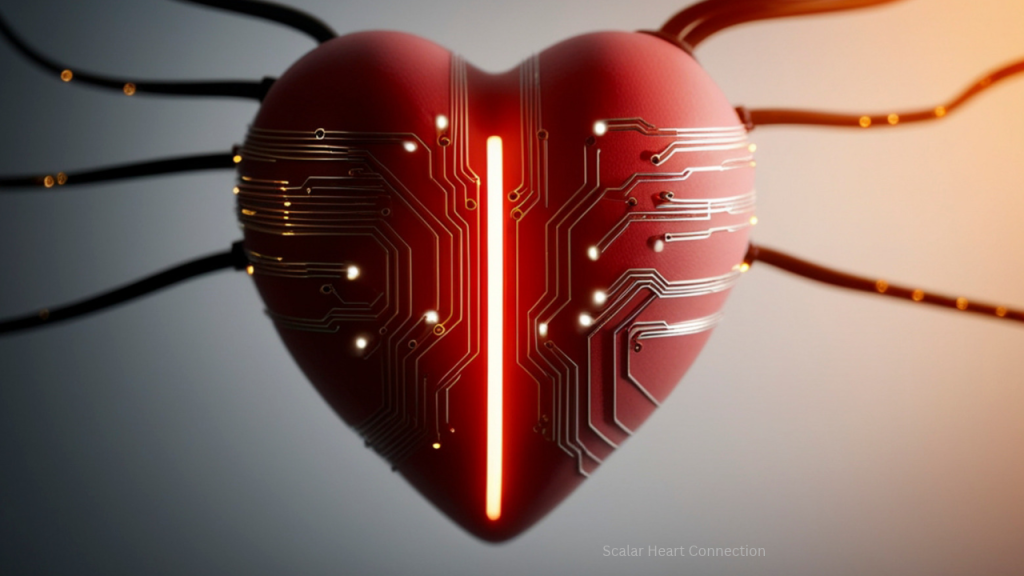
What the Science Reveals About Heart Intelligence
For centuries, cultures around the world have associated the heart with wisdom, insight, and inner knowing. While these traditions emerged long before modern neuroscience, contemporary research into the heart-brain connection has begun revealing that the heart plays a far more active role in human experience than once believed.
The heart contains its own intrinsic nervous system and continuously exchanges information with the brain. It also generates the body’s strongest rhythmic electromagnetic field, extending measurable energy beyond the physical boundaries of the organ itself. Researchers have found that the signals traveling from the heart to the brain can influence emotional processing, attention, stress responses, and cognitive function.
Taken together, these findings have contributed to growing interest in the concept of heart intelligence. Rather than viewing the heart solely as a mechanical pump, researchers increasingly recognize it as an active participant in the complex communication networks that shape human perception and experience.
Can the Heart Respond Before the Brain?
Some of the most intriguing research in this field comes from studies conducted by HeartMath researchers investigating the relationship between intuition and physiology. In one series of experiments, participants viewed randomly selected images that ranged from emotionally neutral scenes to emotionally disturbing content while researchers monitored both their brain activity and heart rhythms.
Unexpectedly, changes in heart rhythm appeared several seconds before participants viewed some of the emotionally significant images. Brain responses followed afterward. While the interpretation of these findings remains a matter of debate and further study, the results prompted researchers to ask whether the heart may participate in forms of information processing that occur prior to conscious awareness.
The possibility that the heart could register meaningful information before the analytical mind becomes aware of it challenges conventional assumptions about perception. Although the mechanisms involved remain uncertain, such studies have sparked renewed interest in the relationship between intuition, physiology, and human awareness.
Understanding the Heart-Brain Connection
Modern science now recognizes the heart-brain connection as a sophisticated two-way communication system. The brain influences heart function through the autonomic nervous system, yet the heart is far from a passive recipient of those signals. It continuously sends information back to the brain, influencing emotional states, attention, decision-making, and overall well-being.
Researchers studying heart coherence have observed that when heart rhythms become more ordered and synchronized, people often report greater emotional balance, improved clarity, and enhanced resilience under stress. This state of coherence appears to support more effective communication between the heart and brain, creating conditions that many associate with improved intuition and a stronger sense of inner alignment.
Rather than existing in a simple hierarchy where the brain commands and the body obeys, the evidence increasingly points toward a partnership in which both organs participate in shaping human experience.
Heart Consciousness and Ancient Wisdom Traditions
Long before scientific instruments could measure electrical activity or physiological coherence, contemplative traditions described the heart as a center of wisdom and spiritual perception. Across cultures and eras, mystics, philosophers, and spiritual teachers spoke of the heart as a source of insight capable of perceiving truths that the rational mind alone could not fully grasp.
Today, scientific investigations into heart consciousness, heart intelligence, and the heart-brain connection are creating new opportunities for dialogue between ancient wisdom and modern research. While science has not established that consciousness originates in the heart, it has revealed that the heart contributes significantly to the networks through which awareness is experienced.
This emerging perspective encourages a more integrated view of human nature, one that recognizes both analytical thought and embodied knowing as valuable aspects of perception.
Developing Greater Awareness of Heart Intelligence
Cultivating awareness of heart intelligence does not require abandoning logic or replacing reason with emotion. Instead, it involves learning to recognize the subtle signals that arise before analytical thinking takes over. Many people describe intuitive experiences as a quiet sense of knowing, a feeling of expansion or contraction, or a persistent impression that continues to surface despite contrary mental arguments.
Developing sensitivity to these signals often begins with practices that reduce mental noise and encourage presence. Reflection, meditation, contemplative inquiry, gratitude practices, and techniques designed to increase heart coherence can all help people become more aware of the relationship between thought, emotion, and intuition.
The goal is not to elevate the heart above the brain but to bring them into greater harmony. When analytical reasoning and intuitive awareness work together, decision-making often becomes more balanced, insightful, and authentic.
What the Heart Can Teach Us About Consciousness
Your heart began beating before your first thought. It organized itself before your brain could direct it, and research suggests it may sometimes respond to meaningful stimuli before conscious awareness fully emerges. These observations do not prove that the heart is the source of consciousness, but they do challenge simplistic assumptions about how intelligence operates within the human organism.
As research into consciousness, intuition, and the heart-brain connection continues to evolve, the heart remains one of the most fascinating subjects in the study of human awareness. It reminds us that intelligence may not be confined solely to cognition or abstract reasoning. Instead, it may emerge through dynamic relationships among the heart, brain, body, and aspects of experience that science is only beginning to explore.
The heart was speaking long before the brain learned to think. Perhaps understanding heart intelligence begins by paying closer attention to the rhythm that has accompanied us from the very beginning.
- Noble, D. Cardiac action and pacemaker potentials based on the Hodgkin-Huxley equations. Nature (1960).
- McCraty, R., Atkinson, M., & Bradley, R. T. Electrophysiological Evidence of Intuition: Part 1. The Surprising Role of the Heart. Journal of Alternative and Complementary Medicine (2004).
- Bentov, I. Stalking the Wild Pendulum (1977).
Experience a Session with Your Heart →
Related Articles: